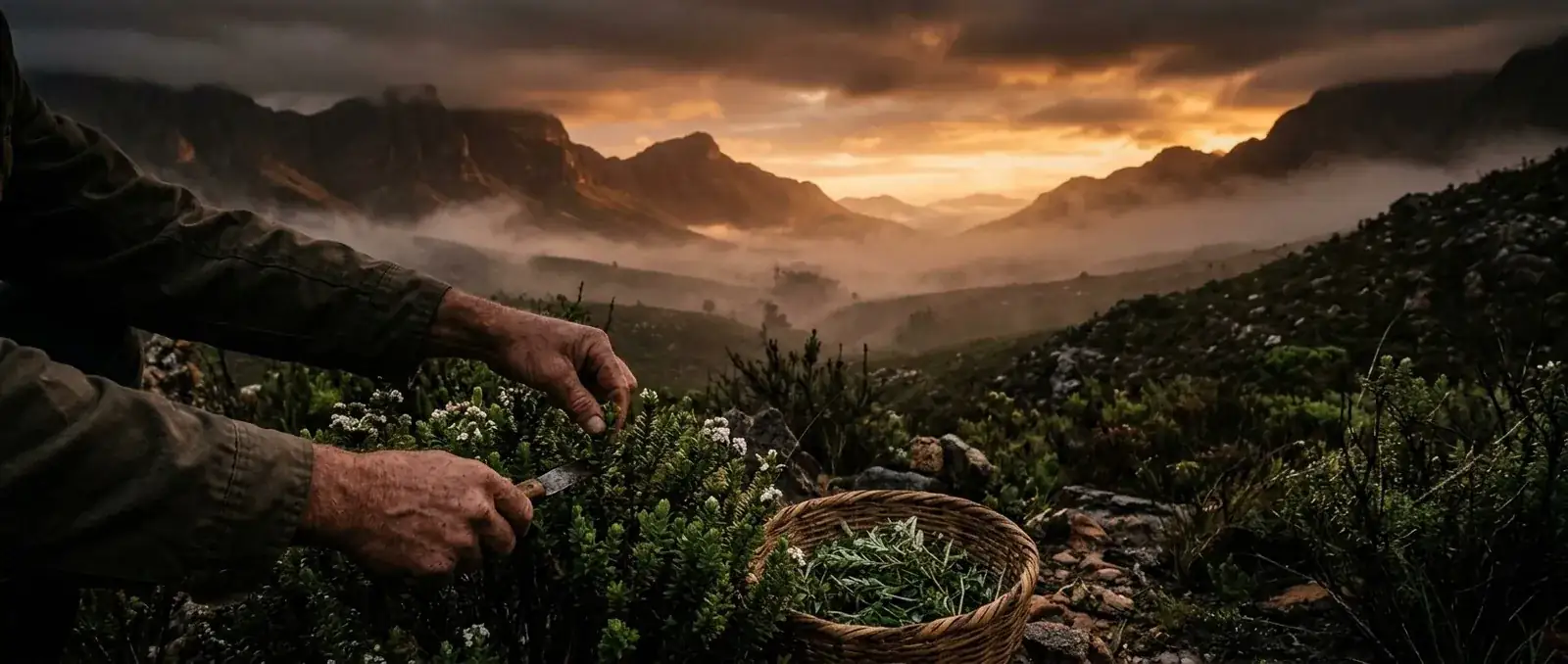
The Cape Floristic Region is one of only six floral kingdoms recognised on Earth.
Fynbos medicinal plants are among the most concentrated and least-documented botanical healing traditions on Earth, with South African healing herbs like Aloe Ferox playing a central role for generations. The Cape's fynbos biome — found nowhere else on the planet in this exact form — has quietly supplied South African communities with a working medicine cabinet for centuries.
Fynbos isn't a single plant but an entire vegetation type, home to thousands of species found in no other biome on Earth. Communities living alongside it developed precise, tested knowledge of which of these plants supported which aspects of health — knowledge built through direct, generational observation rather than laboratory trials.
Among fynbos-adjacent healing plants, Aloe Ferox is probably the most recognised — a tall, spiny aloe found across the Western and Eastern Cape, long valued in South African tradition. Unlike the more commercially familiar Aloe Vera, Aloe Ferox grows wild rather than in cultivated farms, and South African traditional use of it predates the global wellness industry's interest in aloe by generations.
Despite this richness, formal research into fynbos medicinal plants remains limited relative to their diversity. Much of what's known has been passed down through direct teaching rather than published record — which is precisely the gap EarthTrace's guides exist to close, one documented protocol at a time.
Further reading: Wikipedia: Cape Floristic Region · Wikipedia: Aloe ferox
This article shares traditional and ancestral wellness knowledge for educational purposes only. It is not medical advice and is not a substitute for consultation with a qualified healthcare professional. Read our full disclaimer.